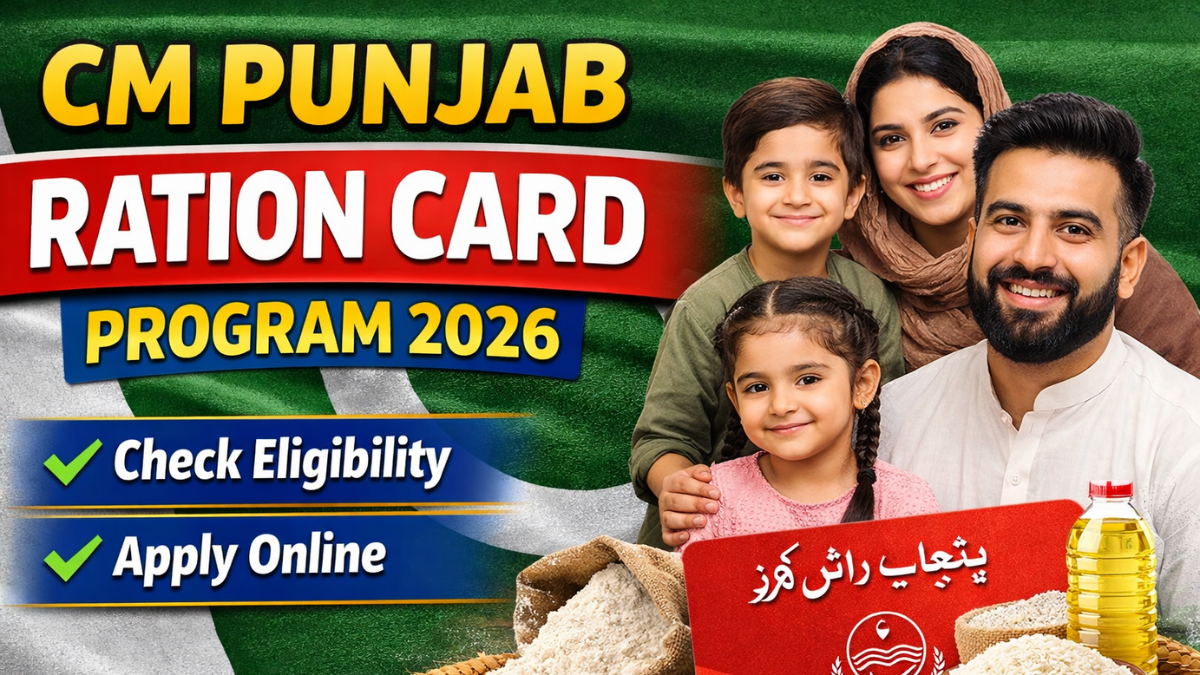
The CM Punjab Ration Card Program 2026 is an important relief initiative launched to support low-income families facing rising inflation and food expenses. The Punjab government has introduced this program to help deserving households receive basic ration assistance so they can manage essential kitchen expenses more easily.
According to the latest updates, families who meet the government’s eligibility criteria can benefit from the Punjab Ration Card scheme. The program is designed to ensure that food subsidies and ration support reach those households that truly need financial assistance.
Under the CM Punjab Ration Card Program 2026, the government plans to provide relief to thousands of deserving families across Punjab. The scheme focuses on improving food security for poor households and helping them buy essential items such as flour, sugar, rice, and other daily necessities at subsidized rates.
One of the most important requirements for this program is registration in the Punjab Socio-Economic Registry (PSER). Families whose information is available in the PSER database may be considered for eligibility verification by the government.
People who are already part of welfare programs such as BISP, Ehsaas Program, or other government support initiatives may also have a higher chance of qualifying for this scheme depending on their poverty score and family details.
Eligibility Criteria
To apply for the CM Punjab Ration Card Program 2026, applicants generally need to meet the following conditions:
• Must be a permanent resident of Punjab
• Must have a valid CNIC
• Household information should be registered in PSER
• Family income should fall under the low-income category
• Applicant should not be a government employee with a high salary
Required Documents
Applicants may need the following documents during registration or verification:
• Valid CNIC
• Registered mobile number
• Household information
• Proof of residence in Punjab
• Income details if required
How to Apply for CM Punjab Ration Card 2026
Families can follow these steps to apply or check eligibility:
- Visit the official Punjab government portal or PSER registration platform.
- Enter your CNIC number and household details.
- Complete the PSER registration process if not already registered.
- Wait for the government verification process.
- If eligible, you will receive confirmation and ration support information.
Benefits of the Program
The Punjab Ration Card scheme aims to provide several benefits for deserving families:
• Subsidized food items
• Financial relief for poor households
• Support during inflation and rising food prices
• Improved food security for families
Read Also PM Ramzan Relief Package 2026: Check Your Name via 9999 SMS
Important Warning
Citizens are advised to avoid fake websites and agents claiming to provide registration for the CM Punjab Ration Card Program 2026. Always use official government portals or authorized registration centers to submit your information.
FAQs – CM Punjab Ration Card Program 2026
What is the CM Punjab Ration Card Program 2026?
The CM Punjab Ration Card Program 2026 is a welfare initiative introduced by the Punjab government to provide ration support and food subsidies to low-income families. The program aims to help deserving households manage daily food expenses during inflation.
Who is eligible for the CM Punjab Ration Card Program?
Residents of Punjab with low household income may qualify. Applicants must have a valid CNIC and their family information should be registered in the Punjab Socio-Economic Registry (PSER).
Is PSER registration required for this program?
Yes, registration in the Punjab Socio-Economic Registry (PSER) is usually required to verify household income and eligibility for the ration card scheme.
How can I check my eligibility for the ration card program?
You can check eligibility by visiting the official Punjab government portal or PSER platform and entering your CNIC number to verify your household status.
How can I apply for the CM Punjab Ration Card Program 2026?
Eligible families can apply by completing their PSER registration, providing household information, and submitting their CNIC details through official government platforms or registration centers.